Safety & Wellbeing
Seating
POSTURAL ALIGNMENT & CONTROL
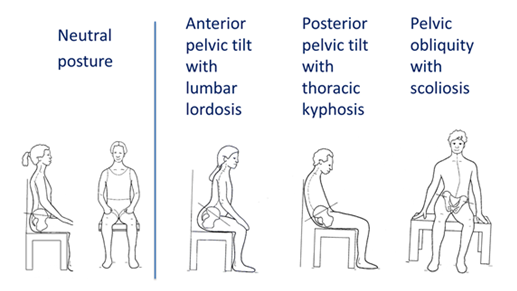
Some central considerations for user comfort and wellbeing are down to your postural alignment and capacity for postural control. In essence, it is all about ensuring that your head, spine and pelvis are appropriately aligned and well supported to minimise fatigue and avoid muscle strain or potential injury. An ideal seating solution provides the tailored supports needed to compensate for lack of motor control, muscle tone and your pelvic, spinal and hip conditions.

Neutral posture and some common postural alignment challenges.
Your selection of a basic seating option is primarily determined by these considerations, including seat contouring, backrests, side bolsters, headrests, lumbar and other positional supports such as thoracic pads and posture harnessing.
People with relatively high muscle tone and good postural control may be best suited to our MPS seating system, whilst those with lower muscle tone, poorer motor control and/or more complex postural issues may be better suited to our Rehab seating range or an aftermarket seating solution.
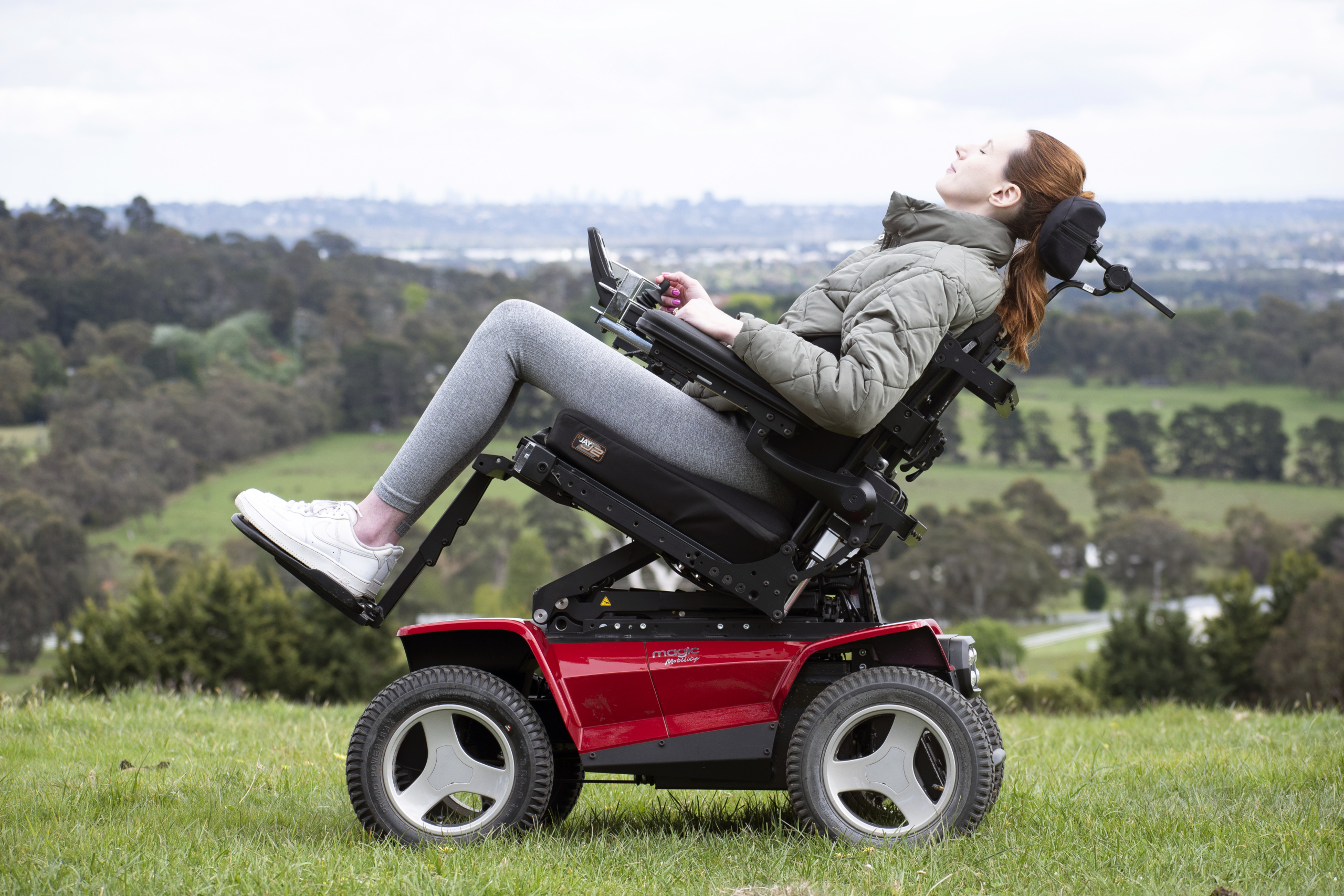
Adjustable seating using tilt in space and/or backrest recline may also be required to maintain or restore postural alignment for people with limited muscle tone or to suit all-day usage needs, or to assist with preventing postural muscle fatigue.
MANAGING YOUR CENTRE OF GRAVITY
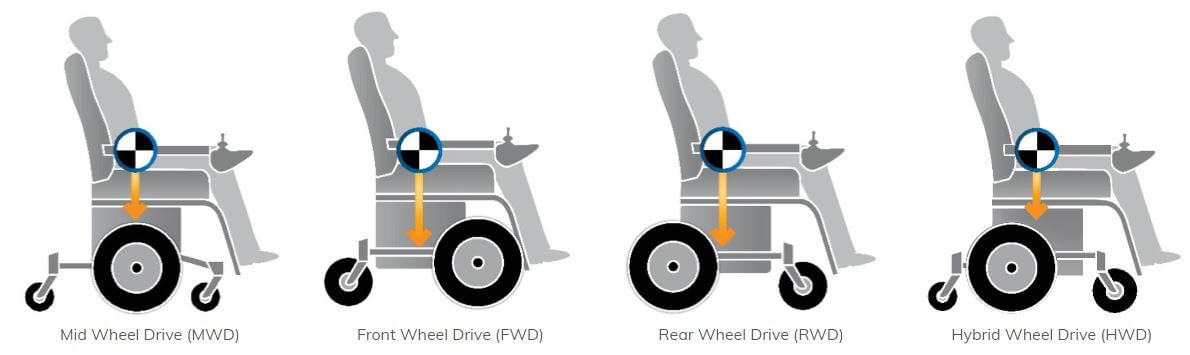
Another important aspect of getting your seating right for optimum postural alignment and control is to ensure that the seat’s placement on the powerchair base is ideal in terms of the relationship between the chair’s centre of rotation and your own centre of gravity (COG).
The mounts for fixing your seat to a Magic Mobility powerchair base as well as the placement of the backrest canes are adjustable, and should be fitted by a powerchair expert to ensure optimal alignment from the outset.
Even if you choose an aftermarket seating system, it is strongly advised to get it fitted to your Magic Mobility base by a Magic Mobility trained powerchair expert or accredited agent.

PRESSURE MANAGEMENT & PAIN RELIEF
Another key issue is how you avoid or minimise local pain or skin damage associated with seated pressure points. Different types of seat cushioning or contouring may be required to help manage these issues, while adjustable seating is often necessary to allow pressure points to be regularly shifted for relief.
Individually tailored seat cushioning can be essential to minimise pain and pressure points. While Magic Mobility’s own Rehab seating provides excellent cushioning, this modular seating system can also accommodate other specialist after-market options which offer dynamic, pressure-reducing solutions such as fluid or air.
Adjustable seat tilt and recline are other primary means to manage pressure issues, because they make it easy for people to shift their weight or relieve primary pressure points. Leg elevation can also be important for people with certain conditions to help maintain good blood flow or relieve joint pain.
Choice of seating fabrics is also important, particularly for people with incontinence or pressure care needs, which can increase the risk of pressure or friction-related skin damage.
RISK MINIMISATION
Seating features such as postural straps that may prevent falls, or contoured footrests and foot straps that keep your feet from slipping off the footrest may also be required to support your wellbeing by minimising the risk of accidental injury.
For people with poor motor control, contoured or highly padded armrests may also be needed to avoid injury.
You can find out more about how to stay safe in your chair here.
If you need advice on how to feel more supported in your chair or want to know more about pressure management and mapping, find your local Magic Mobility agent and book a seating assessment today.
Sign up to our Newsletter
Stay up to date with our latest innovations and user stories.
Cookies & Privacy
This website uses cookies to ensure you get best experience on our website.